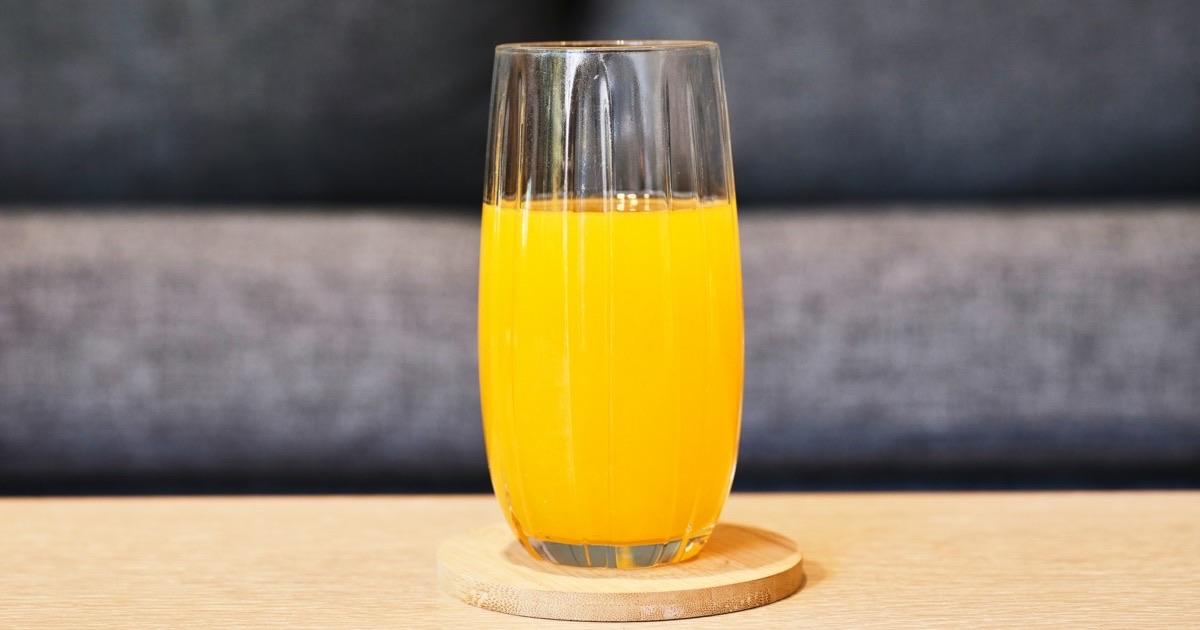
You had a bottle of orange juice at breakfast because it seemed the sensible choice. Lunch was a sandwich at your desk, and with it a bottle of sweet iced tea from the fridge by the checkout. You even skipped dessert. So how much sugar did you have today?
More than you'd guess. According to USDA data, a 12 fl oz bottle of orange juice has about 30 g of sugar. The iced tea, a 16.9 fl oz bottle, added about 50 g more. The World Health Organization suggests that keeping free sugars below roughly 25 g a day would bring extra health benefits. Two drinks, and you're at three times that.
Here's the short answer, then. Plenty of everyday drinks come close to a full day's sugar limit on their own. To see where you stand, you need the limits, the numbers for the drinks you actually buy, and a way to read the label.
How much sugar is too much in a day?
There are two sets of numbers you'll run into. They count slightly different things, so it helps to know both.
The WHO limit. The World Health Organization recommends that adults and children keep free sugars below 10% of their total energy intake, and it rates that as a strong recommendation. It adds that going below 5%, or roughly 25 grams (6 teaspoons) a day, would bring additional benefits. That second step is a conditional recommendation, because the evidence behind it is thinner.
How many grams is 10%? Sugar has four calories per gram. On a 2,000 calorie day, 10% is 200 calories, or 50 g of sugar. That's the same figure the FDA uses as the Daily Value for added sugars: 50 grams a day on a 2,000 calorie diet.
The WHO's "free sugars" are wider than you might think. They include sugar added by the manufacturer, the cook or you, and also the sugars naturally present in honey, syrups, fruit juices and fruit juice concentrates. Sugar in whole fruit and the natural sugar in milk don't count.
The AHA limit. The American Heart Association is stricter, and it focuses on added sugars. It recommends no more than 36 grams (9 teaspoons, 150 calories) a day for men and no more than 25 grams (6 teaspoons, 100 calories) for women. For comparison, the AHA says adults in the US have about 17 teaspoons of added sugar a day on average.
So which one should you use? If you want a single number to keep in mind, 25 g is a reasonable target, because it matches both the WHO's extra step and the AHA's limit for women. The WHO's main limit on a 2,000 calorie day works out to 50 g, the same as the FDA's Daily Value for added sugars. All of these are guidelines for everyday habits, so your usual day matters more than the occasional exception.
How much sugar is in your drinks?
Drinks are a big part of the story. According to the AHA, sweetened drinks such as soft drinks, fruit drinks, sports and energy drinks supply 24% of the added sugar Americans consume, more than any other category, and coffee and tea add another 11%.
Here are typical values from USDA FoodData Central for common drinks, in the serving sizes you'd actually buy them in. The figures are total sugars, rounded to the nearest gram.
| Drink | Serving | Sugar |
|---|---|---|
| Cola | 1 can, 12 fl oz (355 ml) | about 37 g |
| Orange juice, 100% | 1 bottle, 12 fl oz (355 ml) | about 30 g |
| Sports drink | 1 bottle, 20 fl oz (591 ml) | about 33 g |
| Black iced tea, bottled, sweetened | 1 bottle, 16.9 fl oz (500 ml) | about 50 g |
| Almond milk, sweetened | 1 cup, 8 fl oz (237 ml) | about 10 g |
| Fruit smoothie, bottled | 1 cup, 8 fl oz (237 ml) | about 25 g |
| Iced latte, flavored | 1 medium, about 16 fl oz | about 29 g |
| Frozen blended coffee drink | 1 small, about 12 fl oz | about 49 g |
| Energy drink | 1 can, 8 fl oz (237 ml) | about 25 g |
Source: USDA FoodData Central, Survey (FNDDS) entries linked in each row.
A few things stand out. One can of cola already goes past the AHA's 36 g limit for men, and the drinks that sound healthy sit right in the middle of the table.
A fair caveat: these are averages for a generic version of each drink. Your brand can be higher or lower, sometimes by a lot, which is why the label on the bottle is the number to trust. The WHO itself notes that a single can of soda contains up to 40 grams of free sugars, and the AHA puts a 12 ounce can at 10 teaspoons, or 42 grams. The figures differ a little depending on the product and the source.
Juices and smoothies
This is where most people get caught out. The WHO counts the sugars naturally present in fruit juices as free sugars, including the sugar in a 100% juice with nothing added. For orange juice, a 12 fl oz bottle comes to about 30 g.
Bottled smoothies land in a similar place, with about 25 g in one cup. Many bottles hold more than one cup, so the serving size on the label is worth a look before you drink the whole thing.
Sweetened coffee drinks
Coffee drinks with syrup or sweetened milk can carry a surprising amount of sugar. USDA puts a medium flavored iced latte at about 29 g of sugar. A small frozen blended coffee drink comes to about 49 g. Part of that is lactose from the milk, which the WHO doesn't count. For the added part, check the café's nutrition page, or the label if it's a bottled coffee drink.
If coffee drinks are a daily habit, the caffeine adds up too. We looked at that side in how much caffeine is too much in a day.
Sports drinks
A 20 fl oz bottle of sports drink holds about 33 g of sugar. That's close to the AHA's daily limit for men in one bottle. If you drink one after the gym or at your desk in the afternoon, its sugar counts toward your day's total.
Sweetened plant milks
Plant milks are easy to miss, because they mostly end up in coffee, cereal and smoothies. A cup of sweetened almond milk has about 10 g of sugar. USDA lists the unsweetened version at close to none, so if you use a cup or two a day, the word "unsweetened" on the carton makes a real difference.
Iced teas
A 16.9 fl oz bottle of sweetened black iced tea has about 50 g, more than the can of cola in the table. It's the drink in this list with the most sugar per serving. Unsweetened bottled tea exists, and USDA lists it at 0 g.

Why sugar in drinks counts for more
Why focus on drinks at all? Because of what happens at your next meal.
When you take in extra calories, your body can nudge you to eat a bit less later. Researchers call that compensation. Drinks appear to trigger a weak compensatory response, which means the calories in them are less likely to be balanced out.
A well known study on this is DiMeglio and Mattes, published in 2000 in the International Journal of Obesity. They gave 15 adults an extra 1,880 kJ a day (about 450 calories) of carbohydrate for four weeks, once as soda and once as jelly beans, with a break in between. With the jelly beans, people ate less of everything else and made up for the extra calories. In the soda period, their total daily intake went up by about the calories in the soda, and their body weight and BMI rose significantly.
The honest part: this was a small study of 15 people over a few weeks, with a large daily load of sugar. The authors were careful in their conclusion, writing that more energy from drinks may promote positive energy balance, which in plain words means eating more calories than you burn. It's one study, so it can't tell you how your own appetite will respond. Counting your drinks along with your food is a simple way to find out.
How to read the sugar on a label
The Nutrition Facts label on a drink sold in the US gives you two sugar lines. They mean different things.
Total Sugars includes sugars naturally present in foods and drinks, such as the sugar in milk and fruit, plus any added sugars.
Added Sugars covers sugars added during processing, sweeteners such as table sugar, sugars from syrups and honey, and sugars from concentrated fruit or vegetable juices. This line has a %DV next to it. The FDA's rule of thumb: 5% DV or less is a low source of added sugars, 20% DV or more is a high source.
Which line should you watch? The AHA limit is about added sugars, so Added Sugars is the line to compare with it. For the WHO limit, go back to its definition of free sugars above: in a 100% juice, all of the Total Sugars line counts toward it.
Then check the serving size. All the numbers on the label, including the calories, refer to one serving. If the bottle holds two servings and you finish it, the FDA's advice is to double the nutrient and calorie amounts, as well as the %DVs. Some larger packages that could be finished in one sitting use a dual column label showing both the per serving and the per package amounts, which saves you the math.
No Nutrition Facts panel? Read the ingredients. Besides the names ending in "ose", such as maltose or sucrose, sugar can appear as high fructose corn syrup, molasses, cane sugar, corn sweetener, raw sugar, syrup, honey or fruit juice concentrates.
How to keep track of sugar in your drinks
Here's the difficulty. A label gives you one drink at a time, in one serving size, and the day is made of several. Adding up the grams across a whole day in your head is hard, and easy to skip.
We built Brimful for this. Each drink you have goes into a log, either picked from the database or created by you, and its sugar is added to your daily total. You choose a daily sugar limit, and the app shows how close you are and which drinks got you there. Calories, protein and caffeine are tracked in the same log.
Keep in mind that the app's numbers are estimates, since brands vary. After a week of logging, you'll know which drinks carry most of your sugar.
So, how much sugar are you really drinking?
For most adults, the WHO line sits at 50 g of free sugars on a 2,000 calorie day, and the WHO says going below 25 g would bring extra benefits. The AHA suggests no more than 36 g of added sugar for men and 25 g for women. One bottle of sweet iced tea, at about 50 g, reaches the WHO limit by itself and goes well past both AHA limits.
The drinks worth checking first are the ones you have every day, because their sugar adds up across a week.
The takeaway: Check the Added Sugars line and the servings per bottle on the drinks you buy most often, count juice as sugar, and log what you drink for a week. You'll see quickly which drink is worth swapping.